Pelvic health & dyspareunia treatment

5 reasons pelvic floor PT can treat pain during sex

Pain with sex — whether it's called dyspareunia, vaginismus, or vulvodynia — is more common than most people realize. Up to 40% of women experience some form of sexual dysfunction. It's common. But it's not normal. And it's very treatable.

Schedule a free 15-minute consult.

Not ready to book an appointment yet? Talk to Dr. Casey Logan DPT, and Pelvic Health Specialist.
Smiling woman with long brown hair wearing a white coat, blurred background.
Person in a white tank top holding chest and stomach with both hands.

1.

It targets the most common underlying cause

One of the most common causes of painful intercourse is pelvic floor hypertonicity — muscles that are overactive, struggle to relax, or go into spasm. The pelvic floor supports the bladder, bowel, and sexual organs. When those muscles stay guarded or tense, penetration can feel painful or impossible. Pelvic floor PT works directly on restoring that balance.
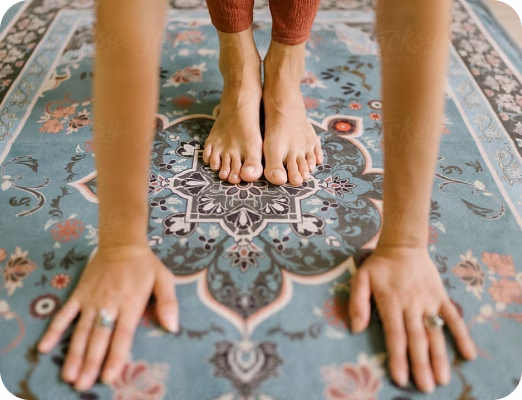
Person's bare feet and hands placed on a patterned blue yoga mat during a stretch or pose.

2.

Strength and relaxation work together — not against each other

It might sound counterintuitive: if muscles are tight, why strengthen them? Research shows that coordinated pelvic floor muscle training — not just stretching — is one of the most effective treatments for dyspareunia. The goal isn't tighter muscles. It's muscles that can fully contract and fully relax, with control. Your PT guides you through that progression the entire way.
Smiling elderly woman using a laptop in a cozy room with soft lighting.

3.

Virtual care is just as effective as in-person

Research shows virtual pelvic floor PT can be just as effective as in-person care for female pelvic health conditions. Your therapist assesses, instructs, monitors, and progresses your treatment step by step — entirely through telehealth. If internal or tissue work is part of your plan, your PT teaches you how to do it safely yourself, using detailed verbal instruction, diagrams, and tools like a pelvic wand if appropriate.
Woman doing yoga plank pose carrying a smiling child on her back inside a bright living room.

4.

Being at home changes everything

Treating pelvic pain requires safety and trust. At home, you move at a pace that feels right. You ask questions openly. You practice techniques in your real environment — not a clinical room. When care fits your schedule and happens in your own space, attendance and follow-through are stronger. And that leads to better outcomes.
Smiling couple embracing outdoors at dusk with string lights in the background.

5.

You leave with control — not a dependency on appointments

The goal of pelvic floor PT isn't to keep you coming back. It's long-term confidence and symptom control. Your therapist builds your understanding of what's happening in your body and equips you with techniques you can use on your own, long after treatment ends. If further in-person work is ever needed, your therapist will tell you honestly and refer you accordingly.